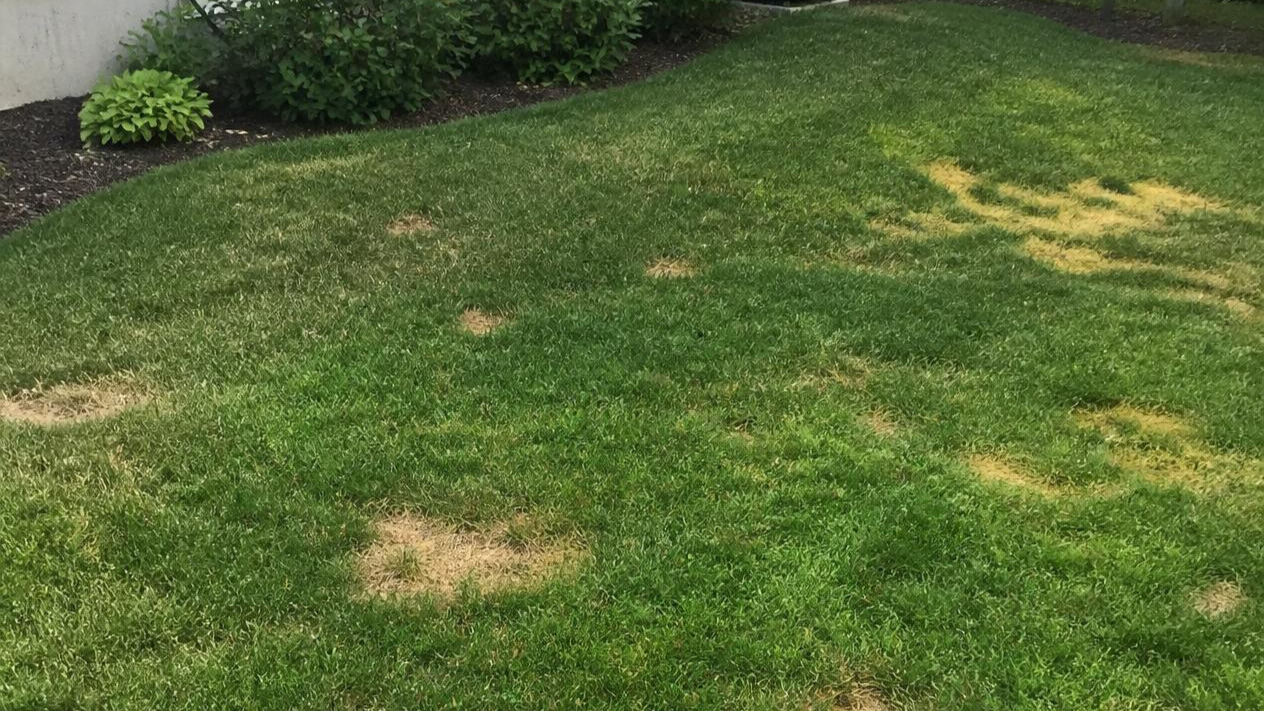
If you’ve got yellow, dead patches scattered across your yard, there’s a good chance you’ve blamed your dog for it — and told yourself you just need to scoop faster. Here’s the surprising truth: dog waste absolutely can damage your lawn, but probably not for the reason you think, and scooping alone won’t fully solve it.
Wait — Isn’t Poop Just “Natural Fertilizer”?
This is the most common misconception we hear from new customers in Ogden, Roy, Farr West, Morgan, Layton, Syracuse, and West Haven. Cow manure and horse manure are genuinely used as fertilizer, so it seems logical that dog waste would work the same way. It doesn’t, and the difference comes down to diet.
Cows and horses are herbivores — their waste is relatively low in nitrogen and rich in digested plant matter, which breaks down into something soil can actually use. Dogs are carnivores (or close to it, depending on their food), and their waste is high in nitrogen and acidity as a result. In small amounts, nitrogen helps grass grow. In the concentrated dose a single pile delivers to one small patch of lawn, it does the opposite — it essentially “burns” the grass, similar to what happens when someone over-fertilizes a lawn with too much store-bought nitrogen fertilizer at once.
So It’s the Nitrogen, Not Just the Mess?
Exactly — and this is the part scooping alone can’t fix. Even if you remove every visible pile promptly, the urine soaked into that same spot carries a similarly concentrated dose of nitrogen and salts. That’s why you’ll sometimes see a dead, yellow patch in a yard that looks otherwise spotless — the solid waste was cleaned up, but the ground underneath had already absorbed enough nitrogen from repeated visits to that same spot to scorch the grass.
This is also why the classic “female dogs cause more lawn burn” myth persists — it’s less about gender and more about concentration and posture. A dog that squats in one general spot delivers urine straight down into a small area, while a male dog marking vertically (on a tree, fence, or bush) often spreads it out or diverts it away from the grass entirely.
What Actually Helps
Prompt, thorough waste removal still matters. While it won’t stop urine burn on its own, removing solid waste quickly limits how much nitrogen soaks into the soil from the pile itself, and prevents bacteria and odor from building up in the meantime.
Watering the spot down. If you know roughly where your dog tends to go, a quick hose-down of that area dilutes the concentrated nitrogen before it has a chance to scorch the grass — this is genuinely one of the most effective things a dog owner can do, even more than the type of grass you plant.
Training a “designated spot.” Many dog owners train their dog to use one consistent area (mulch, gravel, or a less visible corner of the yard) rather than the whole lawn, which contains the damage to one spot instead of leaving yellow patches scattered everywhere.
Rotating cleanup frequency to match your dog(s) and yard size. If you’re on a monthly or biweekly plan and noticing more burn than expected, more frequent visits won’t eliminate urine spots, but consistent solid-waste removal does reduce the overall nitrogen load your lawn is dealing with. We wrote a post recently on how to decide which frequency is right for you.
The Bottom Line
Dog waste isn’t “natural fertilizer” the way people assume, and grass burn isn’t really a scooping problem — it’s a nitrogen concentration problem. Regular, thorough cleanup is still one of the best things you can do for your yard’s health (on top of keeping it safe and pleasant for your family), but if you’re seeing persistent yellow patches, pairing cleanup with quick watering or a designated potty spot will do more for your lawn than scooping frequency alone.
Want one less thing to manage in your yard care routine? Get an instant quote today and I’ll handle the cleanup so you can focus on the rest.